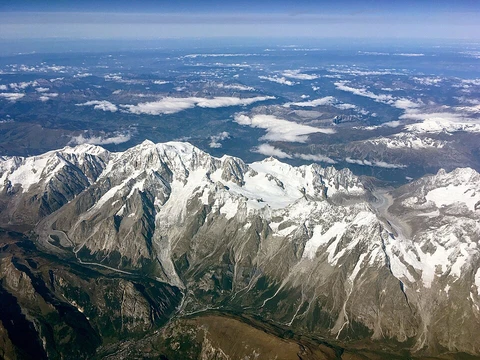
Ural Mountains
Mountain range forming the Europe-Asia boundary.

They form part of the conventional boundary between Europe and Asia, separating European Russia and Siberia. Since the 18th century, the mountains have contributed significantly to the mineral sector of the Russian economy and are one of the largest centers of metallurgy and heavy industry production in Russia.
- location
- Eurasia, mostly in Russia
- resources
- Metal ores, coal, precious and semi-precious stones
- first_geographic_survey
- Early 18th century by Vasily Tatishchev
Lore & Background
The Ural Mountains have been known to medieval Middle Eastern geographers since the 10th century, who traded with Bashkirs and others on the western slopes.
Reader's Guide
The Ural Mountains are significant as a conventional boundary between Europe and Asia and as a major source of mineral wealth for Russia. Their resources include metal ores, coal, and precious and semi-precious stones. Tatishchev proposed factories that led to the cities of Perm and Yekaterinburg. The region's metallurgy and heavy industry remain central to the Russian economy. The name 'Ural' may derive from Turkic 'stone belt' or other origins, reflecting the range's historical role as a natural barrier and resource corridor.
Did You Know?
- The Ural Mountains form part of the conventional boundary between Europe and Asia, separating European Russia and Siberia.
Frequently Asked Questions
Who is Ural Mountains?
The Ural Mountains are a north–south mountain chain stretching across Eurasia, primarily through Russia, from the Arctic coast down to the Ural River near the Caspian Sea. They are best known for serving as the traditional dividing line between Europe and Asia.
What are Ural Mountains's powers/role?
The range acts as a natural continental boundary, splitting European Russia from Siberia. It also functions as a massive resource engine, supplying metal ores, coal, and precious stones that have powered Russian metallurgy and heavy industry since the 1700s.
How does Ural Mountains's story end?
There is no narrative ending — the range is a living geological feature whose highest peak, Mount Narodnaya at 1,894 metres, continues to shape the landscape. Its industrial legacy has evolved from 18th-century mining into modern heavy-industry production that remains central to Russia's economy.
Why is Ural Mountains important?
Beyond its geographic role as the Europe–Asia border, the Ural Mountains are one of Russia's largest centers for metallurgy and heavy-industry output. Their mineral wealth has underpinned the Russian economy for well over two centuries.
When did Ural Mountains first enter the record?
The range was first referenced in Russian writing in 1096 within the Primary Chronicle. The first systematic geographic survey of the mountains was carried out in the early 18th century by Vasily Tatishchev.
More in Mountain Ranges And Massifs 25-29
Related in Mountain Ranges And Massifs
Links follow this subject's own source article.
Elsewhere in the Mountain Ranges And Massifs universe
Spotted an error? Know more?
This is a living reference — every entry is fact-audited, and reader corrections feed straight into our audit queue. Suggest an edit · See this site's audit record