Bucegi Mountains
Central Romanian mountain range with Dacian holy significance.

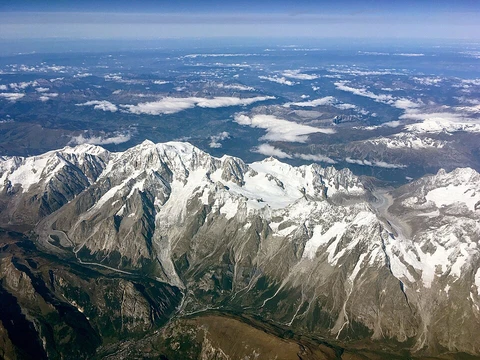
The Bucegi Mountains (Romanian: Munții Bucegi [ˈmuntsij buˈtʃedʒʲ]) are located in central Romania, south of the city of Brașov. They are part of the Southern Carpathians group of the Carpathian Mountains. At 2,505 m (8,219 ft), Omu is its highest point. To the east, the Bucegi Mountains have a very steep slope towards the popular tourist destinations in the Prahova Valley, such as Bușteni and Sinaia. At a higher elevation is the Bucegi Plateau, where wind and rain have turned the rocks into spectacular figures such as the Sphinx and Babele. The Bucegi is believed to be the Dacian holy mountain Kogainon, on which the God Zalmoxis resided in a cave.
- Highest point
- Omu Peak, 2,505 m (8,219 ft)
- Location
- Central Romania, south of Brașov
- Mountain range
- Southern Carpathians (Carpathian Mountains)
- Protected area
- Bucegi Natural Park (since 1935, formalized 1990)
- Area of park
- 32,663 hectares
- Notable features
- Bucegi Plateau, Sphinx, Babele
Verified Timeline
Lore & Background
The exact origin of the name "Bucegi" is disputed by philologists. "Buceag" or "bugeac" seems to be the source of the name, a word designating in the language of mountain people both the moss in the forest and the wilderness or the junipers. An archaic version of the name "Bucegi" is "Buceci", name still used today by elders in the mountains, and about which linguists say it is derived from "huceag", "buceag" or "bugeac". Linguist Sextil Pușcariu claims that the name of Bucșoi, one of the mountains that reach the Omu Peak, derives from "Buc", "Bucur", just as "Buceci", "Bugeci" derives from "Buc" with the same suffix like "Măneciu" or "Moeciu". And "Bucur" is a genuine Dacian name. In Iorgu Iordan's work, Toponimia romînească, the name of the mountains is derived from Slavic buk, meaning "beech".
Reader's Guide
The Bucegi Mountains are bordered by Prahova Valley, an area with the most ski resorts in Romania. Since 1935, part of the Bucegi Mountains has been included in the list of protected areas in Romania, with national park status. Among the most popular ski resorts within the Bucegi Mountains are Sinaia and Bușteni. Nicknamed the "Pearl of the Carpathians", Sinaia offers the possibility of performing winter sports. Ski slopes within the resort are serviced by ski lift, accessible by cable car. The main tourist attractions are Peleș Castle, Pelișor Castle, Royal Station, Sinaia Monastery, Casino, and the George Enescu Memorial House. Bușteni, located at an altitude of 800–900 m, features a diversified base of accommodation and meals (hotels, rest homes, chalets, tourist stops). A cable car links Silva Hotel and Babele Chalet, on the mountaintops. This area has unusual rock formations, such as the Sphinx and Babele. Bușteni is the starting point of trekking on some of the most attractive routes in the Bucegi Massif. In the winter months, Bușteni offers the possibility of practicing skiing and sleighing. There are ski slopes with varying degrees of difficulty. Bușteni is also a cultural point, featuring Cantacuzino Castle and Cezar Petrescu Memorial Museum. There is a trout farm in the area. The Rucăr-Bran Corridor is a mountain pass that has the Bucegi Mountains on one side and the Piatra Craiului Mountains and Iezer-Păpușa Mountains on the other side. The Bucegi Mountains area, whereof exist references since the 15th century, has been proposed for protection in 1936, due to peerless landscapes and great diversity of plant and animal species. This proposal was taken up only in 1990, when materialized through the Minister's order no. 7/1990. Bucegi Natural Park covers an area of 32,663 hectares across three counties (Dâmbovița, Prahova and Brașov), having more than 60% of the territory covered with forests.
Did You Know?
- The Bucegi is believed to be the Dacian holy mountain Kogainon, on which the God Zalmoxis resided in a cave.
- An archaic version of the name "Bucegi" is "Buceci", still used today by elders in the mountains.
- Linguist Sextil Pușcariu claims the name of Bucșoi derives from "Buc" or "Bucur", a genuine Dacian name.
- The Bucegi Mountains have been included in the list of protected areas in Romania since 1935.
- Bucegi Natural Park covers 32,663 hectares across three counties: Dâmbovița, Prahova and Brașov.
Frequently Asked Questions
What is the Bucegi Mountains?
The Bucegi Mountains are a central Romanian range lying just south of Brașov, classified within the Southern Carpathians. Their crowning summit is Omu Peak, which rises to 2,505 metres (8,219 ft).
What is the Bucegi Mountains's role in ancient legend?
Local tradition identifies the range with the Dacian sacred peak Kogainon, a cave-dwelling home of the god Zalmoxis. That mythological association gives the mountains a spiritual weight that stretches back well before the medieval period.
How did the Bucegi Mountains become a protected area?
The region first received legal protection in 1935, and that status was later formalised in 1990 under the name Bucegi Natural Park. The park now covers approximately 32,663 hectares of alpine and forested landscape.
Why is the Bucegi Mountains important to visitors and researchers?
The range contains the Bucegi Plateau along with iconic rock outcrops such as the Sphinx and Babele, drawing hikers and geologists alike. Its position inside the Southern Carpathians also makes it a useful natural laboratory for studying the broader Carpathian geology.
Where exactly is the Bucegi Mountains located?
The range sits in central Romania, south of the city of Brașov, and is part of the larger Carpathian Mountains system. Administratively and geographically it belongs to the Southern Carpathians subgroup rather than the Eastern or Western branches.
More in Mountain Ranges And Massifs 1-24
Related in Mountain Ranges And Massifs
Links follow this subject's own source article.
Elsewhere in the Mountain Ranges And Massifs universe
Spotted an error? Know more?
This is a living reference — every entry is fact-audited, and reader corrections feed straight into our audit queue. Suggest an edit · See this site's audit record