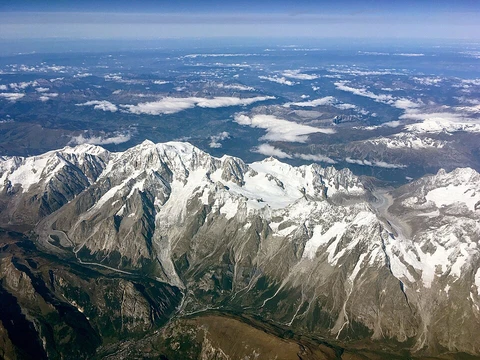
Apuan Alps
Mountain in the Apuan Alps, Tuscany, with marble quarries and World War II history.

Montalto (correctly spelled as Monte Alto or Mont'Alto, in English High Mountain) is a mountain located in Tuscany, Italy and part of the Apuan Alps range. Its highest peak is at roughly 913 meters above the sea level and it is also home of two villages, Retignano and Volegno, in the municipality of Stazzema, Province of Lucca. Montalto was exploited in the past for its well-known marble quarries, opened during the nineteenth century. More recently it was selected for its strategic position to be part of the Gothic Line, during World War II.
- location
- Tuscany, Italy
- highest_peak
- roughly 913 meters above the sea level
Lore & Background
The area of Montalto was already populated in prehistoric times, from the Paleolithic period up to the Bronze Age and Iron Age. The most certain origins of the neighboring villages can date back to the twenty years from 580 to 560 BC, in Roman times, when the inhabitants of the Apuan Alps were known as Liguri Apuani. One tribe settled among the mountain massifs of the Montalto complex, bordered by natural borders and full of resources, including streams, medicinal plants and fauna. The Apuans led a life sowing and exploiting the area of Retignano as a residential area from the spring months until the first winter. In the more sheltered areas and clearings of Gordici and Valimoni, located in the woods, about 700 meters above sea level, called the Apuani luki, there were the remains of small settlements. In the event of war, recourse to a fortified peak was envisaged, a peak from which the horizon could be seen and promptly signaled the arrival of the war. For Retignano, summit tale coincides with the summit of Mount Castello, whose etymology probably has something to do with this fact. From there you can see the entire Versilia valley, the coast and, on clear days, even a glimpse of the Tuscan archipelago.
Reader's Guide
The Apuan Alps are significant for their Carrara marble, a metamorphic rock prized for sculpture and architecture. The range's geology, originating from middle Triassic sea sediments, distinguishes it from the broader Apennines. The marble quarries have long been a source of economic activity, but the No Cav environmental movement opposes quarrying due to its high environmental impact, advocating for the closure of the quarries. The range also hosts diverse fauna, including mammals such as foxes, badgers, and polecats, and over 300 bird species, including golden eagles and peregrine falcons. The name derives from the ancient Apuani Ligures tribe, linking the range to pre-Roman history.
Did You Know?
- The name Montalto is correctly spelled as Monte Alto or Mont'Alto, meaning High Mountain in English.
- In 186 BC, the Ligurians defeated the troops of consul Quintus Marcius Philip in the narrow gorges of Montalto, a site later called Saltus Marcius.
- English entrepreneur James Beresford discovered a unique marble in the Canaletta quarry in 1820, which was shipped to London and possibly used in Marble Arch.
- During the late nineteenth century, about 3,680 people from the Stazzema area emigrated worldwide, including around a hundred from Retignano.
- Montalto was selected for its strategic position to be part of the Gothic Line during World War II.
Ancient Inhabitants and Roman Conflicts
The slopes of Montalto carry evidence of human habitation reaching back to the Paleolithic, with settlements persisting through the Bronze and Iron Ages. The most reliably dated origins of the neighboring villages fall between 580 and 560 BC, when the mountain people known as the Liguri Apuani were already organized into distinct tribes. One such group settled in the extensive Montalto massif, drawn by its natural borders, streams, medicinal plants, and rich fauna. They followed a seasonal pattern, making Retignano their residence from spring until the first winter, while smaller clearings called luki—Apuan for prairies—at roughly 700 meters in the woods of Gordici and Valimoni held traces of modest dwellings. In times of war, they withdrew to a fortified summit offering a view across the entire Versilia valley, the coast, and on clear days the Tuscan archipelago. This peak, probably named Mount Castello for its defensive function, anchored Apuan resistance against Rome. In 186 BC, the Ligurians drew the troops of consul Quintus Marcius Philip into Montalto's narrow gorges and steep slopes, delivering a crushing defeat. The Romans stripped their weapons to retreat faster, and the site earned the name Saltus Marcius.
The Marble Boom and Economic Transformation
In the summer of 1820, Englishman James Beresford and his partner Grybrin, working with local inhabitants, discovered in the Canaletta quarry a marble unique to the Retignano mountains—a striking combination of mixed, turquoise, and floral bardiglio. The stone quickly won over British buyers, and blocks were shipped by sea, presumably to London, where Versilia marble would later adorn landmarks such as Marble Arch. The following year the two entrepreneurs formalized their venture, renting the Messette quarry for nine years at a canon of 6,000 scudi, while the retignanesi reactivated extraction across the Gabbro, Ajola, Gordici, and Messette sites. By the time of Italian unification in 1861, marble had become the village's dominant economic force, displacing chestnut cultivation and traditional farming. Yet the trade proved insufficient to sustain the community. With fields and livestock abandoned, many residents emigrated to the plains, and in the late nineteenth century roughly 3,680 people from the Stazzema area, including about a hundred from Retignano, scattered across the globe in search of fortune. Documents also show that Retignano marble was used in the reconstruction of the Montecassino monastery.
Strategic Military Significance Across the Centuries
Montalto's commanding elevation of roughly 913 meters and its sweeping vantage over the Versilia valley, the Ligurian coast, and the distant Tuscan archipelago made it a natural fortress across the centuries. The Ligurian Apuani recognized this strategic value in antiquity, retreating to a fortified peak to signal approaching enemies and defend their territory against repeated Roman incursions. That same geographic logic resurfaced in the twentieth century, when the mountain was chosen for its strategic position to form part of the Gothic Line during World War II. The narrow gorges and steep slopes that had once trapped Roman legionaries in 186 BC again proved formidable terrain for military operations. The mountain's recurring role in both ancient and modern warfare underscores how its physical character—extensive massifs bounded by natural borders, dense woodland, and elevated clearings—has consistently shaped the human history of the Alta Versilia.
Alpine Heritage and Modern Recreation
Montalto sits within the Apuan Alps range in Tuscany, Italy, and shelters two small villages—Retignano and Volegno—within the municipality of Stazzema in the Province of Lucca. The mountain has long attracted alpinists and naturalists; among those who visited the area were Francis Fox Tuckett, Douglas William Freshfield, and Giovanni Targioni Tozzetti, each drawn by the rugged terrain and rich biodiversity of the massif. Today, the main slope of the mountain hosts tree routes for free climbing, an activity regulated by the Tuscany Region to preserve both climber safety and the integrity of the forested landscape. The surrounding environment still holds the resources that sustained ancient inhabitants: streams, medicinal plants, and varied fauna populate the clearings and wooded valleys. Local place names carry echoes of that deep past, from the Apuan word luki for prairies to the likely defensive origin of Mount Castello, testifying to a continuous human relationship with this landscape that stretches from Paleolithic foraging to contemporary outdoor recreation.
Frequently Asked Questions
What exactly are the Apuan Alps?
The Apuan Alps are a roughly 55-kilometre-long mountain range tucked into northern Tuscany, Italy. They sit between the Serchio and Magra river valleys, bordering the Garfagnana and Lunigiana areas.
Why is the Apuan Alps famous worldwide?
The range is most celebrated for the Carrara marble quarries carved into its slopes, a stone that has supplied sculptors and architects for centuries. Its geological roots trace back to Middle Triassic marine sediments that were later uplifted into rock.
What is the highest point in the Apuan Alps?
Monte Pisanino tops the range at 1,946 metres (about 6,385 feet) above sea level. It is the peak most hikers and local guides point to when describing the massif's skyline.
Where does the name 'Apuan' come from?
The range takes its name from the Apuani Ligures, an ancient tribal group that inhabited the area long before Roman times. The toponym stuck through the centuries and is still the standard English and Italian designation.
How does the Apuan Alps compare in size to other Tuscan ranges?
At roughly 34 miles in length it is a compact massif rather than an extended chain, making it one of the more concentrated mountain blocks in Tuscany. Its relatively small footprint belies the enormous cultural and economic impact of its marble deposits.
More in Mountain Ranges And Massifs 1-24
Elsewhere in the Mountain Ranges And Massifs universe
Spotted an error? Know more?
This is a living reference — every entry is fact-audited, and reader corrections feed straight into our audit queue. Suggest an edit · See this site's audit record